0 Rainwater harvesting: the drought it makes worse
- News
- by Administrator
- 08-10-2026
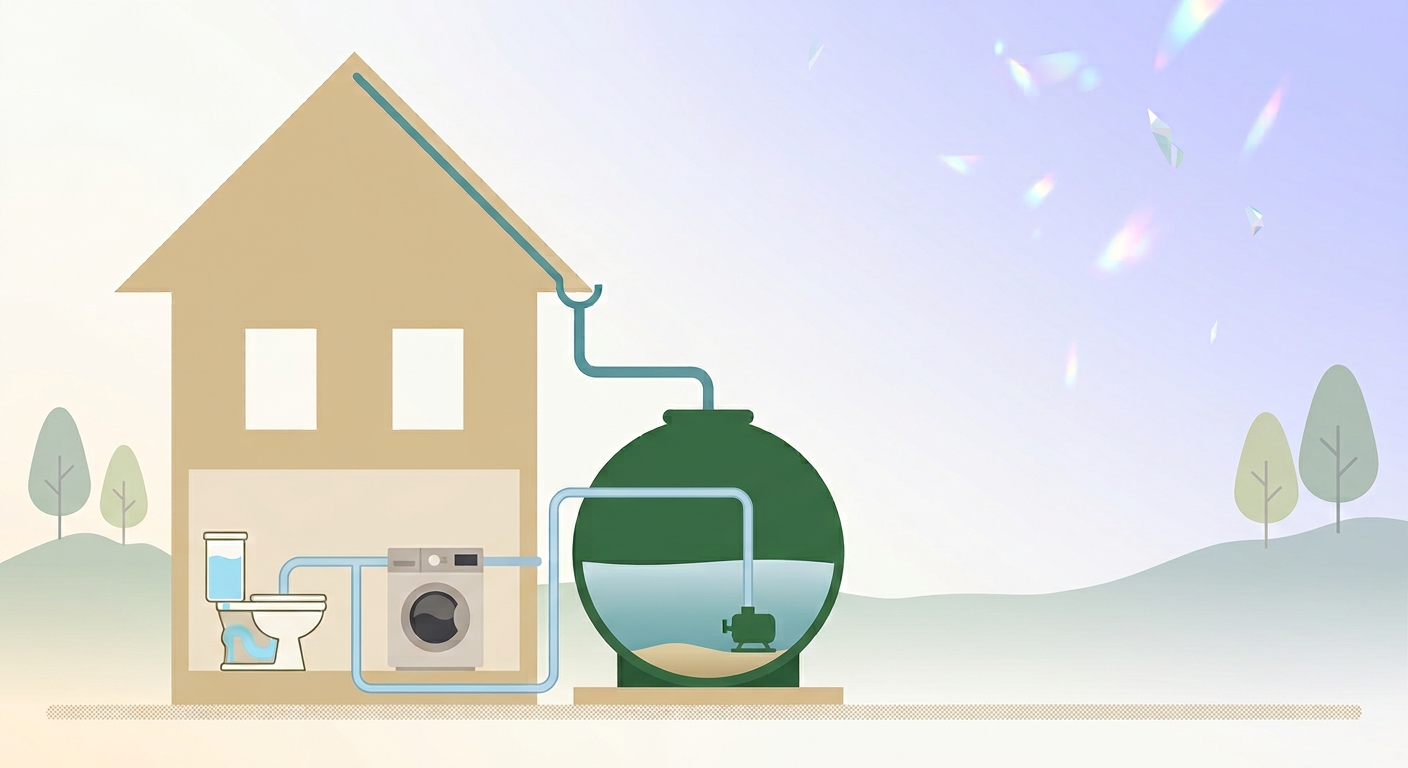
Homes with rainwater harvesting can use more mains water in a drought
Rainwater harvesting (RWH) for use inside the home is widely promoted as a way to save water. Under the current Part G water efficiency rules, it does the opposite.
We modelled two identical one-bedroom homes using the Government's water efficiency methodology. Both comply at 109.2 litres per person per day. The home with RWH earns a credit for harvested rainwater, which allows a 16 l/min shower instead of 8.7 l/min.
It doesn't reduce mains water demand. In normal conditions, both homes use exactly the same amount of mains water. The RWH system saves nothing. It simply allows less efficient fittings.
It increases mains water demand in a drought. When the tank runs dry, the RWH home switches to mains water and uses 143.6 litres per person per day. That's about 31% more than the home without RWH, at exactly the time supplies are under the most pressure.
It increases flows to the foul sewer. The RWH home uses about a third more water every day, whatever the weather, and all of it goes to the foul network. That includes up to around 27,500 litres of rainwater a year from this one small home. Across a large development, the extra load on already stretched sewers could be considerable.
A better approach
Require all homes to meet 110 litres per person per day through water-efficient fittings alone, and use water butts for garden watering. This genuinely reduces mains demand, reduces flows to the foul sewer, and keeps rainwater out of it.
Good drainage design starts with the numbers, not the label. If you'd like an independent view on the right approach for your site, get in touch.